- Published on
Here in the Chicago area, we are sweltering through a third day in a row of extreme heat (100+ degrees) and many homes in my community were without power for most of the week due to a powerful storm that barreled through last Sunday. All over the state of Illinois and the Midwest, it's been hot, hot, hot. How hot, you ask? Well, a hot librarian knows where to go for answers to all sorts of questions, including those about the weather!
How how is it?
Hotter than a honeymoon hotel...
Hotter than a stolen tamale...
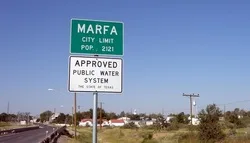
Hotter than a fur coat in Marfa --Texas, that is...
(Thanks for my friends at Texas Monthly for those!)
Hotter than a honeymoon hotel...
Hotter than a stolen tamale...
Hotter than a fur coat in Marfa --Texas, that is...
(Thanks for my friends at Texas Monthly for those!)
How hot is it?
It's so hot that I have found out (the hard way) that my seat belt buckle could be used as a branding iron.
It was so hot today I saw an Amish guy buying an air conditioner.
(Courtesy: www.yooohaaa.com)
It's so hot that I have found out (the hard way) that my seat belt buckle could be used as a branding iron.
It was so hot today I saw an Amish guy buying an air conditioner.
(Courtesy: www.yooohaaa.com)
How hot is it?
Hotter than the backlog o' hell...
Hotter than hell with the blower on...
Hotter'n a burnt boot...
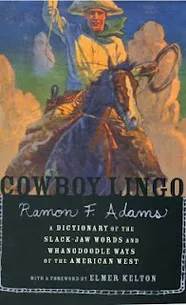
All from Cowboy Lingo: A Dictionary of the Slack-Jaw Words and Whangdoodle Ways of the American West by Ramon F. Adams (Houghton Mifflin, New York, 2000)
Hotter than the backlog o' hell...
Hotter than hell with the blower on...
Hotter'n a burnt boot...
All from Cowboy Lingo: A Dictionary of the Slack-Jaw Words and Whangdoodle Ways of the American West by Ramon F. Adams (Houghton Mifflin, New York, 2000)

How hot is it?
Hotter than a two-dollar pistol - Very hot, an allusion to cheap 19th-century pistols that got hot when fired.
Hotter than Methodist hell - About as hot as it can get; an expression used chiefly in Maine.
Hotter'n a skunk - 1. Very drunk. 2. Very hot weather or anything hot.
Hotter'n love in hayin' time - Extremely hot.
All from: Facts on File Dictionary of American Regionalisms: Local Expressions from Coast to Coast by Robert Hendrickson (Facts on File, New York, 2000)
Hotter than a two-dollar pistol - Very hot, an allusion to cheap 19th-century pistols that got hot when fired.
Hotter than Methodist hell - About as hot as it can get; an expression used chiefly in Maine.
Hotter'n a skunk - 1. Very drunk. 2. Very hot weather or anything hot.
Hotter'n love in hayin' time - Extremely hot.
All from: Facts on File Dictionary of American Regionalisms: Local Expressions from Coast to Coast by Robert Hendrickson (Facts on File, New York, 2000)
How hot is it?
Hotter than an iPad 3 after a couple minutes use...
Hotter than a steel playground slide at noon...
Hotter than a habañero orbiting the sun...
Hotter than an iPad 3 after a couple minutes use...
Hotter than a steel playground slide at noon...
Hotter than a habañero orbiting the sun...

How hot is it?
Hotter than a Times-Square Rolex...
Hotter than a brazen hussy in church...
Hotter than blue blazes...
Hotter than a Times-Square Rolex...
Hotter than a brazen hussy in church...
Hotter than blue blazes...
This actually makes sense from a scientific point of view since the hotter the source of light, the shorter its wavelength, and blue light has the shortest wavelength of the visible spectrum. Well, officially it is called violet, but physicists generally refer to the end of the spectrum that includes violet as the blue end and this is due to how our eyes see color. We have three kinds of color sensing cells, called cones, in our eyes. These cones sense red, green, and blue light. So every color we perceive is some combination of red, green, and blue. That includes yellow, believe it or not. So physicists just talk about those three colors. Maybe they never had the 64-pack of Crayola Crayons to color with as children! But I digress... So hotter than red hot, even hotter than white hot, is blue hot. (Or, for purists, violet hot.)
(Thanks to Amazing Space from the Space Telescope Science Institute's Office of Public Outreach.)
(Thanks to Amazing Space from the Space Telescope Science Institute's Office of Public Outreach.)
- Published on
Well, this is nowhere near as clever as the Librarians do Lady Gaga parody (which you can view here in the Lady Gaga category), but it is timely. I am not sure why they selected Curious George (a male monkey) over, say, Bemelmans' Madeline (who was a bit of a girl gone wild in a much more sedate and chaste era), but maybe that was the only Big Book they had on hand at the ALA Conference.
- Published on
Did you realize that you can still hear remnants of the Big Bang using an old radio or television set? (No, I'm not talking about the CBS sit-com about the physics geeks.)
Here's an amazing science factoid: if you turn any old radio or TV dial in between assigned broadcast stations, a small percentage of that white noise you hear is the sound of the Big Bang, left over from the moment the Universe was created (as theoretical physics posits).
Here's a cool video that explains the process for non-physicists:
Here's an amazing science factoid: if you turn any old radio or TV dial in between assigned broadcast stations, a small percentage of that white noise you hear is the sound of the Big Bang, left over from the moment the Universe was created (as theoretical physics posits).
Here's a cool video that explains the process for non-physicists:
- Published on
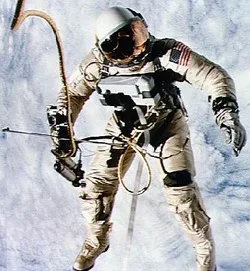
On this day in 1965, astronaut Edward White became the first American to “walk” in space, during the flight of Gemini 4.
White was selected as a member of the astronaut team by NASA in September 1962. He was pilot for Gemini 4, which was a 66-revolution, 4-day mission that launched on June 3, and ended on June 7, 1965. He was outside Gemini 4 for 21 minutes. Other highlights of the mission included cabin depressurization, the opening of cabin doors, and 12 scientific and medical experiments. He was awarded the NASA Exceptional Service Medal and U.S. Air Force Senior Astronaut Wings. On March 21, 1966, he was named one of the pilots of the AS-204 mission, the first 3-man Apollo flight. Tragically, he died on January 27, 1967, in the Apollo spacecraft flash fire during a launch pad test at Kennedy Space Center, Florida.
White was selected as a member of the astronaut team by NASA in September 1962. He was pilot for Gemini 4, which was a 66-revolution, 4-day mission that launched on June 3, and ended on June 7, 1965. He was outside Gemini 4 for 21 minutes. Other highlights of the mission included cabin depressurization, the opening of cabin doors, and 12 scientific and medical experiments. He was awarded the NASA Exceptional Service Medal and U.S. Air Force Senior Astronaut Wings. On March 21, 1966, he was named one of the pilots of the AS-204 mission, the first 3-man Apollo flight. Tragically, he died on January 27, 1967, in the Apollo spacecraft flash fire during a launch pad test at Kennedy Space Center, Florida.
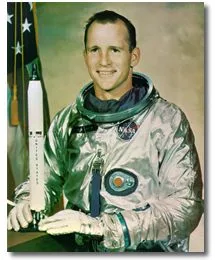
Lieutenant Colonel Edward H. White
- Published on
"Those who expect to reap the blessings of freedom must...undergo the fatigue of supporting it." --Thomas Paine: The American Crisis, No. 4, 1777
On this Memorial Day, I am thankful that the closest I have ever come to experiencing life in a war zone is by reading about it or listening to the oral histories of World War II and Vietnam veterans. And so a list of books, including straightforward nonfiction and memoir, that can begin to make that which is incomprehensible -- the personal experience of war -- understandable.
On this Memorial Day, I am thankful that the closest I have ever come to experiencing life in a war zone is by reading about it or listening to the oral histories of World War II and Vietnam veterans. And so a list of books, including straightforward nonfiction and memoir, that can begin to make that which is incomprehensible -- the personal experience of war -- understandable.
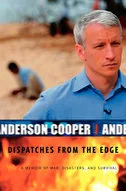
Dispatches From The Edge Anderson Cooper (2007)
The correspondent and anchor for CNN recounts events from his life and career, offering a behind-the-scenes look at some of the most devastating modern tragedies (in Burma, Vietnam, and Somalia) and their effect on his own life.
The correspondent and anchor for CNN recounts events from his life and career, offering a behind-the-scenes look at some of the most devastating modern tragedies (in Burma, Vietnam, and Somalia) and their effect on his own life.
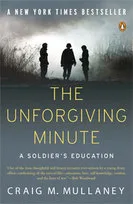
The Unforgiving Minutes: a soldier's education Craig Mullaney (2009)
From a blue-collar upbringing, Mullaney rose to graduate from West Point, became a Rhodes scholar, and then an Army Ranger. He takes an unflinching look at the ways in which his extensive military education did and did not prepare him for his experiences in Afghanistan, and how those experiences shaped his views, and his later work as a Naval Academy instructor.
From a blue-collar upbringing, Mullaney rose to graduate from West Point, became a Rhodes scholar, and then an Army Ranger. He takes an unflinching look at the ways in which his extensive military education did and did not prepare him for his experiences in Afghanistan, and how those experiences shaped his views, and his later work as a Naval Academy instructor.
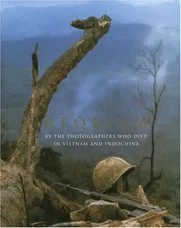
Requiem: by the photographers who died in Vietnam and Indochina (1997)
A photographic essay that takes readers on an emotional journey into the wars in Indochina, Cambodia, Vietnam, and Laos. Divided into five sections, the book begins with the early notions of the wars, continues through the escalation, and ends with the final days of the conflicts. Essays are included on some of the photographers, providing readers with a glimpse into the lives of these brave men and women. The photographers' accounts of the fighting provided to various news wires are also included, but the photographs are so poignant and moving that they virtually tell the stories on their own.
A photographic essay that takes readers on an emotional journey into the wars in Indochina, Cambodia, Vietnam, and Laos. Divided into five sections, the book begins with the early notions of the wars, continues through the escalation, and ends with the final days of the conflicts. Essays are included on some of the photographers, providing readers with a glimpse into the lives of these brave men and women. The photographers' accounts of the fighting provided to various news wires are also included, but the photographs are so poignant and moving that they virtually tell the stories on their own.
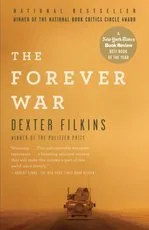
The Forever War Dexter Filkins (2008)
The New York Times correspondent provides a firsthand account of the battle against Islamic fundamentalism, from the rise of the Taliban in the 1990s, to the terrorist attacks of 9/11, to the wars in Afghanistan and Iraq, offering a study of the people involved from all sides of the conflict.
The New York Times correspondent provides a firsthand account of the battle against Islamic fundamentalism, from the rise of the Taliban in the 1990s, to the terrorist attacks of 9/11, to the wars in Afghanistan and Iraq, offering a study of the people involved from all sides of the conflict.
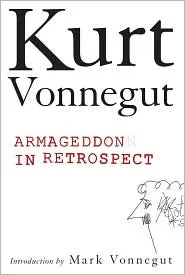
Armageddon in Retrospect Kurt Vonnegut (2008)
Twelve previously unpublished writings on war and peace
include such pieces as an essay on the destruction of Dresden, a story about the first-meal fantasies of three soldiers, and a meditation on the impossibility of shielding children from the temptations of violence.
Twelve previously unpublished writings on war and peace
include such pieces as an essay on the destruction of Dresden, a story about the first-meal fantasies of three soldiers, and a meditation on the impossibility of shielding children from the temptations of violence.
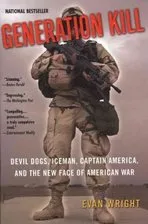
Generation Kill: Devil Dogs, Iceman, Captain America, and the new face of American war Evan Wright (2004)
Wright rode into Iraq on March 20, 2003, with a platoon of First Reconnaissance Battalion Marines—the Marine Corps' special operations unit whose motto is "Swift, Silent, Deadly." He writes a gripping narrative on the lives of these twenty-three soldiers who led the attack, describing their training and the physical and psychological challenges they faced in skirmishes leading to the fall of Baghdad.
Wright rode into Iraq on March 20, 2003, with a platoon of First Reconnaissance Battalion Marines—the Marine Corps' special operations unit whose motto is "Swift, Silent, Deadly." He writes a gripping narrative on the lives of these twenty-three soldiers who led the attack, describing their training and the physical and psychological challenges they faced in skirmishes leading to the fall of Baghdad.
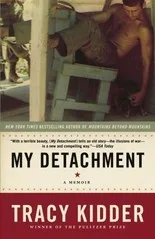
My Detachment Tracy Kidder (2005)
Pulitzer Prize winner Kidder (The Soul of a New Machine) uses his gift for narrative nonfiction in this memoir of his year in Vietnam as a young army officer. This isn't a blood-and-guts thriller, but a story of painful self-revelation and amusing coming of age. He joined the ROTC as a confused Harvard student and ended up in a not very dangerous corner of Vietnam monitoring radio patterns. His attempts to command his detachment of bored enlisted men and his letters home, laced with fictional heroics, could have been the stuff of melodrama, but Kidder's storytelling and humor rise above. His account is an introspective, demythologizing dose of reality seen through the eyes of a perceptive, though immature, army intelligence lieutenant at a rear-area base camp. War isn't hell here; it's "an abstraction, dots on a map."
Pulitzer Prize winner Kidder (The Soul of a New Machine) uses his gift for narrative nonfiction in this memoir of his year in Vietnam as a young army officer. This isn't a blood-and-guts thriller, but a story of painful self-revelation and amusing coming of age. He joined the ROTC as a confused Harvard student and ended up in a not very dangerous corner of Vietnam monitoring radio patterns. His attempts to command his detachment of bored enlisted men and his letters home, laced with fictional heroics, could have been the stuff of melodrama, but Kidder's storytelling and humor rise above. His account is an introspective, demythologizing dose of reality seen through the eyes of a perceptive, though immature, army intelligence lieutenant at a rear-area base camp. War isn't hell here; it's "an abstraction, dots on a map."
- Published on
Let's face it -- graduation ceremonies can be long, drawn-out, boring, sweaty affairs in which cap-and-gown clad adolescents or young adults and their family members squat on uncomfortable folding chairs in stuffy fieldhouses or under the hot, scorching sun for hours, listening to fairly mundane speechifying and a long list of names before having their ten seconds in the spotlight, during which they hope and pray that they (or their loved ones) don't do something mortifying like stumbling across the stage (graduates) or blowing an airhorn or ringing cowbells (family members) simply because the student actually managed to graduate from high school (or college). Yo, really??? You don't need to do The Wave because your baby got his or her diploma. It's not that much of an achievement in 2012.

Part of the problem is the commencement address. Most are trite, repetitive and not written in especially soaring language that transcends space and time. (And I admit, neither is this blog -- but that's entirely beside the point.) What if commencement addresses could be distilled to their essence so that we got the message without all the repetitious medium, saving us hours of our precious lives and sweat?

They might sound something like this:
"Find your passion. Believe in yourself. Do not let others define who you are. Have big dreams. Follow your heart and your intuition. Take action and get in the game. Do what you love. Be bold and courageous. Use your imagination and creativity. You do not need to be perfect. It's okay to fail. Do not give up. Live in the present moment. Think that you can do it. Take risks. Embrace change. Work hard, play hard and keep walking the path. Maintain your integrity. Give back. Keep learning."
"Find your passion. Believe in yourself. Do not let others define who you are. Have big dreams. Follow your heart and your intuition. Take action and get in the game. Do what you love. Be bold and courageous. Use your imagination and creativity. You do not need to be perfect. It's okay to fail. Do not give up. Live in the present moment. Think that you can do it. Take risks. Embrace change. Work hard, play hard and keep walking the path. Maintain your integrity. Give back. Keep learning."
There you go. All the wisdom of the world packed into two minutes or less (depending on how fast you talk)! Leaving the extended family much more time to sit around the kitchen or patio, arguing about politics, religion or whether the viewers who actually vote for "American Idol" contestants are biased in favor of WGWGs (white guys with guitars). Because it appears that some people actually care about such things. "American Idol," that is. And they presumbly graduated from high school. So 'nuff said about that achievement.
- Published on
Since I doubt if I could write it any better, for your enjoyment, I pass along this link to Alexandra Petri's column in The Washington Post. Happy 2012!

Will it be the end of the world as we know it? Well, I feel fine!