- Published on
A viral video..."The Joy of Books." They are just so darned adorable, why would anyone want a Kindle or a Nook or a Kobo? Don't tell me how much a big hardcover weighs or how hard they are to lug around. Good grief, exercise those biceps...Thank you, crazedadman!
- Published on
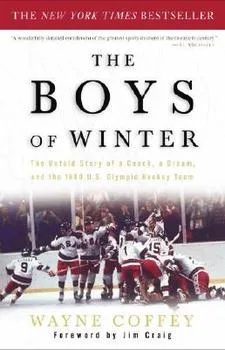
If you’re looking for a thrilling nonfiction read to chase the chill on a winter’s day or night, you might try Wayne Coffey’s The Boys of Winter, subtitled “the untold story of a coach, a dream, and the 1980 U.S. Olympic hockey team.” This well written and meticulously researched book looks back at one of the greatest moments of twentieth-century sports history, the improbable victory of the U.S. hockey team over the Soviet Union, assessing the meaning of the triumph and examining the paths taken by the players and coaches on both sides since 1980. Coffey never descends into melodrama, which would have been easy to do given the situation, but captures the details and backstories that went unreported in the frenzy. Coach Herb Brooks, portrayed as an obstinate, aloof, savvy genius, molded a roster of 20 amateur, mostly college-age young men into a team notable for its grit, creativity and an ethic of teamwork. The Soviet team is humanized, as we learn how they scrounged for Band-Aids and avoided using slap shots because a shortage of quality hockey sticks in the Soviet Union meant they couldn't risk breaking them, details which, if revealed at the time, would have implied a weakness in the Soviet regime. Coffey's saga carries us back to a more innocent Olympics era, when doping and judging scandals were not everyday occurrences (except on the East German women’s swim team) and when there were no multi-millionaire professionals playing on an overhyped "dream team."
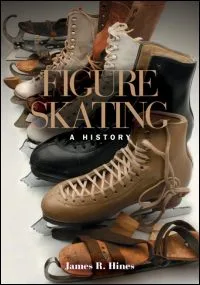
For a look at a different sport involving an ice rink and skates, try Figure Skating: a history by James R. Hines. Hines includes profiles of many individual skaters, including World and Olympic champions, all of whom, in Dick Button's words, "left the sport better because they were in it." In this volume, you will learn how the jumps got their names like Triple Salchow and Double Axel; read the saga of the woman who broke into the previously all-male World Championships in 1902; and find out the lesser-known details of the tale of Sonja Henie, who figure-skated her way onto the silver screen. Beyond the contributions of individual skaters, Figure Skating also examines the evolution of the sport over time and the judging scandals that have marred recent competitions. Hines takes a look at the rise of ice shows and discusses social, political, and ethical concerns that have affected the sport. You can also peruse the photo gallery for your favorite World and Olympic champion, complete through 2005.
- Published on
Looking for a reason to cut back on Christmas commercialism? Try reading Scroogenomics by Joel Waldfogel. I’ll bet you’ve never associated Christmas with the phrase “deadweight loss,” but economist Waldfogel wants to enlighten you in this treatise on wastefulness of holiday consumerism, particularly gift-giving. Waldfogel is not really a “bah humbug” sort of guy; he merely wants people to be more thoughtful about their gift-giving habits and avoid the misallocation of resources and that dreaded deadweight loss phenomenon, which is defined as a “loss to one party that is not offset by a benefit to another.” What that means in plain English is when you give a gift to someone for which they have no absolutely no desire or use, there is an economic loss of value for each party. Which happens more often than we would like to think -- hence, the re-gifting phenomenon. Waldfogel suggest the use of gift cards, which let the recipients choose for themselves, conserving value, or making a charitable donation in the recipient’s name, or just eliminating gift-giving entirely with those people who you really don’t know well enough to choose a gift they will value and enjoy. A sensible thought, and hardly Scrooge-like. For an interview with Waldfogel, visit FailureMagazine.
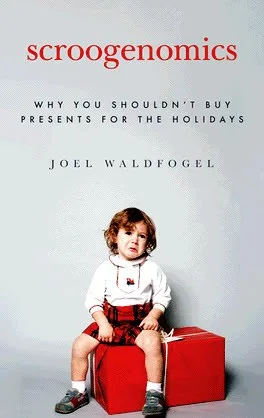
Aaawwww, why did Mommy have to quit being a Material Girl now?
- Published on
Now that we've had our first measurable snowfall in the Chicago area (okay, it wasn't very much), my thoughts again turn to books that celebrate the white stuff. Some classics for children (and the adults who love them):
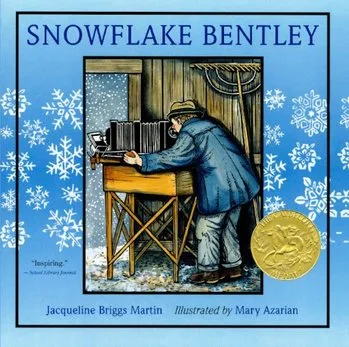
Snowflake Bentley by Jacqueline Briggs Martin. This lovely picture book won the Caldecott Award in 1999. It tells the story of Wilson "Snowflake" Bentley, a simple farmer in Vermont, who was fascinated by snow. When he receives the gift of a microscope from his mother, he begins a lifelong study of snow crystals. With the eyes of both a scientist and a poet, he is determined to share his discoveries, as well as the beauty of snow crystals with others, by capturing them in photographs. The illustrations in this book are wondrous woodcuts by Mary Azarian and they fit perfectly with the lyrical text.
Snowflake Bentley by Jacqueline Briggs Martin. This lovely picture book won the Caldecott Award in 1999. It tells the story of Wilson "Snowflake" Bentley, a simple farmer in Vermont, who was fascinated by snow. When he receives the gift of a microscope from his mother, he begins a lifelong study of snow crystals. With the eyes of both a scientist and a poet, he is determined to share his discoveries, as well as the beauty of snow crystals with others, by capturing them in photographs. The illustrations in this book are wondrous woodcuts by Mary Azarian and they fit perfectly with the lyrical text.
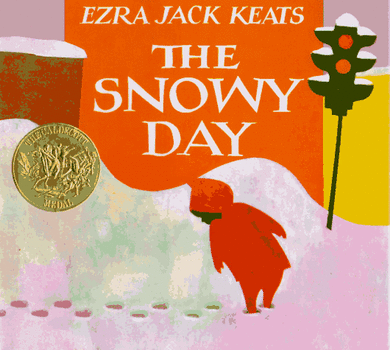
Another favorite of mine is The Snowy Day by Jack Ezra Keats. It also won the Caldecott Medal, way back in 1963. It's the simple story of a boy named Peter savoring the joys of a snowy day. I love it because, having grown up in a city, I can relate to the urban environment through which Peter wanders in his red snowsuit, dragging his stick. The illustrations capture the waning sunlight of late afternoons in December and the lavender skies that hang low after the sun has dipped below the horizon. First published in 1962, this now-classic book also broke the color barrier in mainstream children's publishing. I remember as a child thinking it was wonderful to see a child in a book who was the same color as many of my own friends.
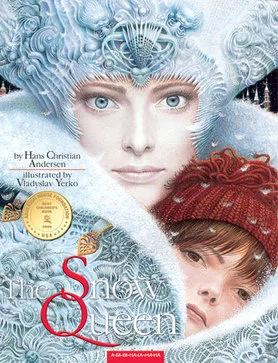
And we can't forget The Snow Queen by Hans Christian Andersen. In this chilly fairy tale, an imp creates an evil mirror in which beauty is made ugly. The mirror shatters and the pieces scatter and cause evil throughout the world. Kai and Gerta are playmates. Kai is struck in the eye by a fragment of the mirror and overnight
changes and alarms Gerta. He is attracted to and carried off by the evil Snow Queen and taken to her frozen palace. In the spirit of true friendship, Gerta sets off on a quest to find him and has many adventures along the way. One of my favorite versions of this story is illustrated by Vladyslav Yerko.
changes and alarms Gerta. He is attracted to and carried off by the evil Snow Queen and taken to her frozen palace. In the spirit of true friendship, Gerta sets off on a quest to find him and has many adventures along the way. One of my favorite versions of this story is illustrated by Vladyslav Yerko.
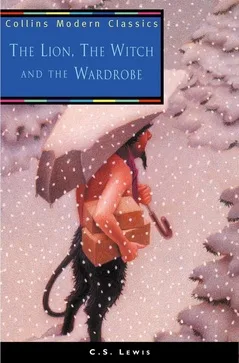
I would be remiss to not mention the lovely work of C.S. Lewis: The Lion, the Witch and the Wardrobe. Four siblings — Peter, Susan, Edmund,
and Lucy — to be sent away from London during WWII to live in the country with the kind-hearted but remote Professor. The children will soon discover that the Professor's mansion holds many mysteries, including a room which holds nothing but a large wardrobe. When Lucy, the youngest, opens it one rainy day, they discover a passageway into Narnia, a once peaceful world inhabited by Fauns, Dwarves, Giants, and Talking Beasts. But now Narnia is a place "where it is always winter, but never Christmas" by the evil, but seductive White Witch who rules over it. The children become entangled in an adventure that encompasses betrayal, forgiveness, death, and rebirth. I never actually read this as a child. I only discovered it through my own children -- and spent many happy evenings reading it aloud to them at bedtime. Imagine a place where it is perpetual winter, without the joys of the holidays to brighten the darkness. Brrrrrrrrrrrr!!!
and Lucy — to be sent away from London during WWII to live in the country with the kind-hearted but remote Professor. The children will soon discover that the Professor's mansion holds many mysteries, including a room which holds nothing but a large wardrobe. When Lucy, the youngest, opens it one rainy day, they discover a passageway into Narnia, a once peaceful world inhabited by Fauns, Dwarves, Giants, and Talking Beasts. But now Narnia is a place "where it is always winter, but never Christmas" by the evil, but seductive White Witch who rules over it. The children become entangled in an adventure that encompasses betrayal, forgiveness, death, and rebirth. I never actually read this as a child. I only discovered it through my own children -- and spent many happy evenings reading it aloud to them at bedtime. Imagine a place where it is perpetual winter, without the joys of the holidays to brighten the darkness. Brrrrrrrrrrrr!!!
- Published on
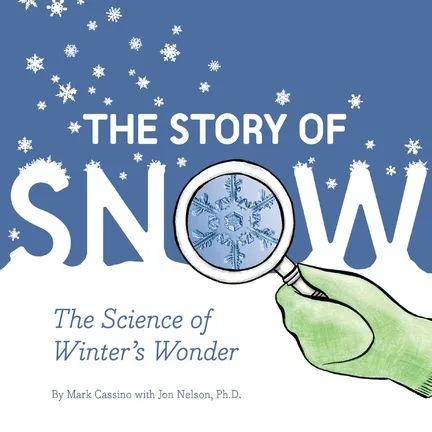
So you think you know everything there is to know about snowflakes? Well, heat up some cocoa, nestle down in your favorite easy chair and get ready to learn more -- maybe even everything you always wanted to know about the flakes from above but were too busy catching them on your tongue to ask. By the end of The Story of Snow by Mark Cassino, you'll be wishing for a blizzard so you can follow the instructions he provides for catching and viewing snow crystals.
Ever wonder just how snow crystals form? And what shapes they can take? Is it really true that no two snow crystals are alike? Cassino answers these questions and more in this visually stunning exploration of the science of snow. It's the perfect short read for winter days, with fabulous photos of real snow crystals in all their wondrous diversity.
Ever wonder just how snow crystals form? And what shapes they can take? Is it really true that no two snow crystals are alike? Cassino answers these questions and more in this visually stunning exploration of the science of snow. It's the perfect short read for winter days, with fabulous photos of real snow crystals in all their wondrous diversity.
- Published on
If you live in Wheaton, Illinois, you will recognize the above as the central slogan for the city's annual holiday celebrations. And with good reason. Charles Dickens wrote no less than five novels centered around the Christmas season!
He started off in 1843 with the first and most enduring of his Christmas tales, A Christmas Carol, which is now known as the annual Christmas chestnut or cash cow, particularly among theatre groups and their patrons. But did you know that this beloved story, which sends a message that cuts through the materialistic trappings of the season and gets to the heart and soul of the holidays, was actually written as the result of the author's desperate need of money. In the fall of 1843 Dickens and his wife were expecting their fifth child. Requests for money from his extended family, a large mortgage on his Devonshire Terrace home, and lagging sales from the monthly installments of his latest novel, Martin Chuzzlewit, had left Dickens seriously short of cash.
He started off in 1843 with the first and most enduring of his Christmas tales, A Christmas Carol, which is now known as the annual Christmas chestnut or cash cow, particularly among theatre groups and their patrons. But did you know that this beloved story, which sends a message that cuts through the materialistic trappings of the season and gets to the heart and soul of the holidays, was actually written as the result of the author's desperate need of money. In the fall of 1843 Dickens and his wife were expecting their fifth child. Requests for money from his extended family, a large mortgage on his Devonshire Terrace home, and lagging sales from the monthly installments of his latest novel, Martin Chuzzlewit, had left Dickens seriously short of cash.
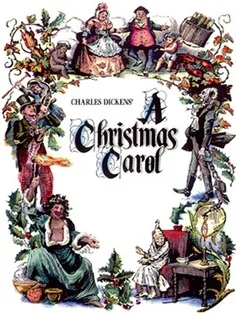
The idea for the story came during a trip Dickens took to Manchester, England to give a speech in support the Athenaeum, a school which provided adult education for factory workers. This experience of championing education as a remedy for crime and poverty, along with a recent visit to the Field Lane Ragged School, a night school for those in abject poverty, made Dickens resolve to "strike a sledge hammer blow" for the poor.
At odds with his publishers, Dickens paid for the production cost of the book himself (yes, he self-published!) and insisted on a lavish design that included a gold-stamped cover and four hand-colored etchings. He also set the price at 5 shillings so that the book would be affordable to nearly everyone.
The book was published the week before Christmas and became an instant hit. And the rest is history... and annual revivals at the Goodman Theatre.
At odds with his publishers, Dickens paid for the production cost of the book himself (yes, he self-published!) and insisted on a lavish design that included a gold-stamped cover and four hand-colored etchings. He also set the price at 5 shillings so that the book would be affordable to nearly everyone.
The book was published the week before Christmas and became an instant hit. And the rest is history... and annual revivals at the Goodman Theatre.
Dickens published four other Christmas books, none of which achieved the same popularity as A Christmas Carol, but each has its own singular charms.
The Chimes, published in 1844, tells the tale of Trotty Veck, a poor ticket porter, whose viewpoint is changed from despair to hope by the spirits of the chimes on New Year's Eve. The Chimes is a bit more topical than A Christmas Carol, referencing social problems more specific to the 1840s. As such, it has lost some of its relevance to today's audience.
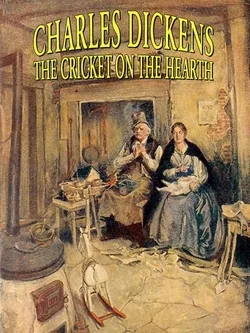
The Cricket on the Hearth, published in 1845, centers on John and Dot Peerybingle, whose marriage is compromised by its May-December nature. Confronted with Dot's possible infidelity, John consults the spirit of the Cricket on the Hearth, whose chirping supposedly brings good luck. The cricket reassures John that all will be well. The misunderstanding is resolved and the couple's happiness restored.
The Chimes, published in 1844, tells the tale of Trotty Veck, a poor ticket porter, whose viewpoint is changed from despair to hope by the spirits of the chimes on New Year's Eve. The Chimes is a bit more topical than A Christmas Carol, referencing social problems more specific to the 1840s. As such, it has lost some of its relevance to today's audience.
The Cricket on the Hearth, published in 1845, centers on John and Dot Peerybingle, whose marriage is compromised by its May-December nature. Confronted with Dot's possible infidelity, John consults the spirit of the Cricket on the Hearth, whose chirping supposedly brings good luck. The cricket reassures John that all will be well. The misunderstanding is resolved and the couple's happiness restored.
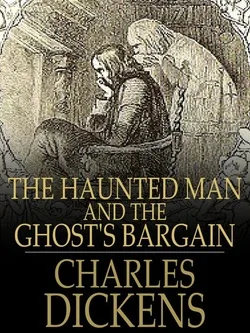
In 1846, Dickens brought forth The Battle of Life, which was the least successful of his Christmas stories. In 1848, he wrote his final Christmas tale, The Haunted Man and the Ghost's Bargain, the story of Mr. Redlaw, a chemistry professor who is tormented by painful memories. He is visited on Christmas Eve by a phantom, his doppelganger, who bestows the gift of forgetting these memories. The catch
is that others who come into contact with the professor also lose remembrance of past hurts and sorrows. Redlaw passes on this gift to members of the Swidger family. For some this might seem a good thing, but for others, whose present happiness is based on remembrance of the past, it is a bitter pill. In the end, the gift is reversed by benevolent nature of Milly Swidger, whose raw memories of her lost child are the source of her kindness.
For Dickens, Christmas was far more ghostly than any Halloween...
is that others who come into contact with the professor also lose remembrance of past hurts and sorrows. Redlaw passes on this gift to members of the Swidger family. For some this might seem a good thing, but for others, whose present happiness is based on remembrance of the past, it is a bitter pill. In the end, the gift is reversed by benevolent nature of Milly Swidger, whose raw memories of her lost child are the source of her kindness.
For Dickens, Christmas was far more ghostly than any Halloween...
- Published on
Now that we have given Thanksgiving its due place in the holiday pantheon, we can begin to celebrate the season of lights... as well as snow, frostbite, ice and their remedies, hot chocolate. Winter, in those areas of the world that actually experience all four seasons, can be gorgeous and brutal, exhilirating and debilitating, all within the space of a few minutes. But it has also sparked some of the finest fiction bound between two covers. So grab a cup of cocoa, wrap a throw around your shoulders and keep warm with these chilly scenes of winter:
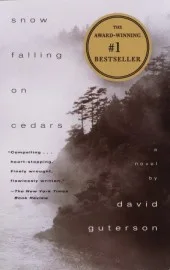
Snow Falling on Cedars by David Guterson is a novel that has been praised for its eloquent dramatization of themes of love, racism, justice and community. It wraps a suspenseful story of a murder trial with a beautiful evocation of lost love, and brooding, poetic descriptions of place and character. It is a blend of courtroom drama and romance that takes place in a small town in Washington. Set in 1954, the novel examines the dynamics of the fictitious community of San Piedro Island after World War II and the aftermath of the Japanese-American internment in that era.
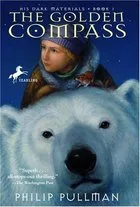
The Golden Compass (originally published in England as Northern Lights) by Philip Pullman is usually designated a young-adult book, but don't let that fool you. It's not just for tweens and teens. It's the first novel in Pullman's His Dark Materials trilogy and it's a wonderous fantasy set in a world that parallels our own, but with magical twists and thoughtful, thought-provoking turns. The novel tells the story of a young girl named Lyra Belacqua who, it turns out, is destined to save the world. Lyra, like the heroes of many children's novels, grows up more or less an orphan, yet lives happily among the scholars of Jordan College in Oxford until her best friend Roger is kidnapped. His disappearance, along with other strange occurrences, sets off a course of events that leads her (with a band of gypsies) into the coldest and darkest part of the earth, the North. You will feel the hostile wind biting your cheeks as you read this book, which manages to be a page-turning thriller AND a philosophical meditation at once.
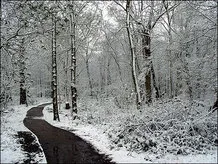
And that's just a start for your winter's reading... next up, holiday stories!
- Published on
First graders love to read the dedication pages of books. They exhibit a wonderful curiosity about the who and the why and the how. And working with curious children is a fabulous way to keep one's own curiosity sparked... so the conversation I had the other day with a first grader about dedication pages and their purposes led me to dig into the background of dedication pages in some famous books we all know and (maybe) love...
One of my favorite (dare I say my absolute favorite?!?!) novels is The Great Gatsby, which F. Scott Fitzgerald dedicated "Once again to Zelda." This was, of course, his wife, Zelda Sayre. Beautiful, but mentally unstable, she inspired him to literary heights and tormented, personal depths of despair. To say their love and
One of my favorite (dare I say my absolute favorite?!?!) novels is The Great Gatsby, which F. Scott Fitzgerald dedicated "Once again to Zelda." This was, of course, his wife, Zelda Sayre. Beautiful, but mentally unstable, she inspired him to literary heights and tormented, personal depths of despair. To say their love and
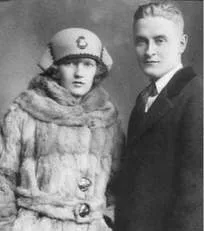
their life together were tumultuous would be an understatement. It ended with him mired in alcoholism and her locked in the Highland Mental Hospital. Aaaaah, the writing life....
Then there is Ayn Rand. Recently, I noted that I have not read her doorstops--er, novels, but I did
Then there is Ayn Rand. Recently, I noted that I have not read her doorstops--er, novels, but I did
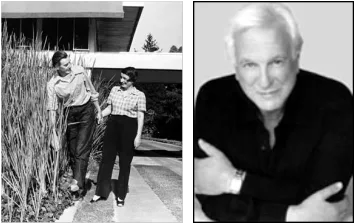
pick up Atlas Shrugged the other day at the library and gave its 1,000+ pages a glance. It's dedication reads: "To Frank O'Connor and Nathaniel Branden." Turns out these two gents were her husband and her lover. Well, alrighty then... moving along...
From the sublime to the ridiculous... Jacqueline Susann dedicated her pot-boiler Valley of the Dolls to her poodle, Josephine, who had played a role in a previous book: "To Josephine, who sat at my feet, positive I was writing a sequel... but most of all to Irving." Irving, by the way, was her husband. So we know who came first in her life. I have already informed my cats that my next book will NOT be dedicated to them.
From the sublime to the ridiculous... Jacqueline Susann dedicated her pot-boiler Valley of the Dolls to her poodle, Josephine, who had played a role in a previous book: "To Josephine, who sat at my feet, positive I was writing a sequel... but most of all to Irving." Irving, by the way, was her husband. So we know who came first in her life. I have already informed my cats that my next book will NOT be dedicated to them.
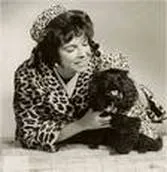
Jacqueline and Josephine
- Published on
Wouldn't it be nice if authors who wrote series and sequels had the forethought to title their books in alphabetical order? Then there would be no patron confusion as to which book came next, or about why we librarians arrange them in alphabetical, instead of chronological, order. Inevitably we get questions as to why Catching Fire (the third novel of Suzanne Collins' Hunger Games trilogy) is shelved before The Hunger Games and Mockingjay or why The Amber Spyglass (the third book of Phillip Pullman's His Dark Materials trilogy) is shelved ahead of The Golden Compass and The Subtle Knife, or why the Harry Potter books aren't in the right order. So we salute a couple of authors who make our jobs easier:
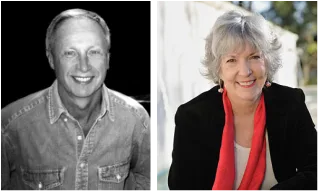
Ron Roy, author of the A to Z Mystery series for children ("The Absent Author," "The Bald Bandit," etc.)
Sue Grafton, author of the Kinsey Millhone mystery series ("A" is for Alibi, "B" is for Burglar, etc.)
Hmmm, why are they always mysteries? Or are there others? It's a mystery I will have to investigate.
Sue Grafton, author of the Kinsey Millhone mystery series ("A" is for Alibi, "B" is for Burglar, etc.)
Hmmm, why are they always mysteries? Or are there others? It's a mystery I will have to investigate.
- Published on
Autumn has truly descended upon our northern climes (this week is starting to feel more like mid-November -- but perhaps we are spoiled by last week's glorious last-gasp of summer). As the chill settles with the dying leaves, one's thoughts may turn to decline and fall of civilization as we know it... or one may find diversion in a good ghost story and other tales that celebrate the macabre. So here is a list, in no particular order, of some of my favorites:
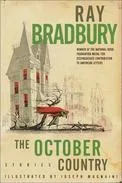
The October Country by Ray Bradbury: a short story collection that fascinates with its exploration of childhood loss ("The Lake"), paranoia ("Skeleton"), the dark side of the carnival ("The Dwarf"), and fear of infants ("The Small Assassin.") You can't go wrong with any book that contains descriptive language such as this:
The October Country by Ray Bradbury: a short story collection that fascinates with its exploration of childhood loss ("The Lake"), paranoia ("Skeleton"), the dark side of the carnival ("The Dwarf"), and fear of infants ("The Small Assassin.") You can't go wrong with any book that contains descriptive language such as this:
“That country where it is always turning late in the year. That country where the hills are fog and the rivers are mist; where noons go quickly, dusks and twilights linger, and midnights stay. That country composed in the main of cellars, sub-cellars, coal-bins, closets, attics, and pantries faced away from the sun. That country whose people are autumn people, thinking only autumn thoughts. Whose people passing at night on the empty walks sound like rain.”
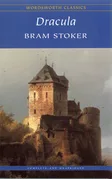
Dracula by Bram Stoker: The classic vampire story. Just thinking about re-reading the scene in which Jonathan Harker finds himself in a carriage hurtling along the winding passages of Transylvania gives me chills... and that haunting phrase "Denn die Todten reiten schnell" - ("For the dead travel fast").
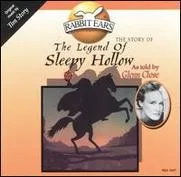
The Legend of Sleepy Hollow by Washington Irving: I have an audio version of this narrated by Glenn Close (from the Rabbit Ears recording series) that is simply mesmerizing. You can hear the crackling leaves, the menacing hoofbeats and smell the fog rising from the fields... all through the power of her incredible voice.
Interview with a Vampire by Anne Rice: Their side of the story... told with elegance, wit and, of course, quantities of blood. New Orleans never seemed so luscious as when seen through the eyes of Louis, Lestat and Claudia, that unholy trinity...
Carrie by Stephen King: The Master of Creep... he writes a lot longer now... but he doesn't tell a story any better than he did in this creepy, bloody, soaked in the '70s tale of the tragedies that happen when high school bullying meets telekinetic powers.
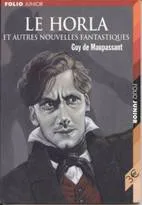
The Horla by Guy de Maupassant: for a short story that was published in 1887, this chilling tale has a surprisingly modern theme of vampiric possession by an evil alien intelligence. But we are not talking little green men descending from the skies or Transformers transforming. This malevolent force comes from some unknown dimension to establish its reign of terror. Major shudders from the reader ensue!
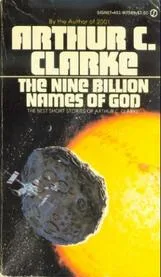
The Nine Billion Names of God by Arthur C. Clarke: This short science fiction story from 1954 is an engrossing doomsday tale that sucks you in with its run-of-the-mill descriptions of the Tibetan monks going about the business of listing all the possible names, including enlisting a computer and two Western programmers to help expedite the process, with the belief that the Universe will end when the task is achieved. The scientists are skeptics, but go along for the pay. The real kicker, of course, comes at the end, as the Westerners are flying back home... they notice "that overhead, without any fuss, the stars were going out." How masterful to end it all with a whisper, rather than a shout...