- Published on
- Published on
And we're talking a glass of wine the size of a 7-11 Big Gulp! Every night -- with dinner --- and sometimes before!



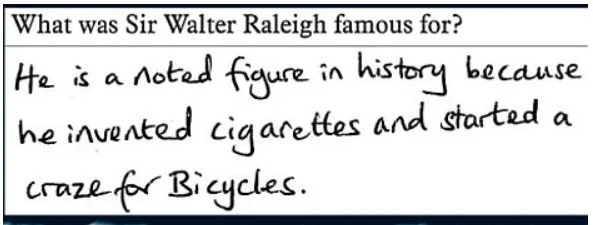
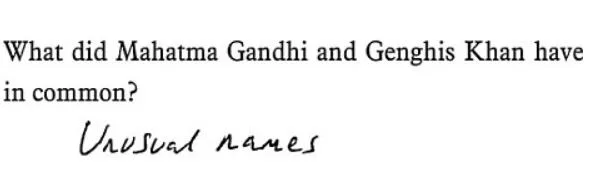
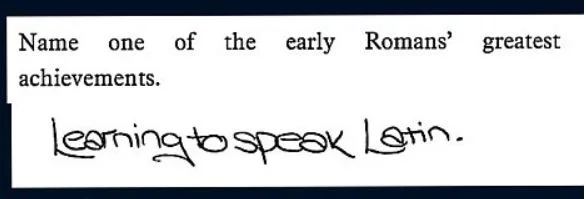
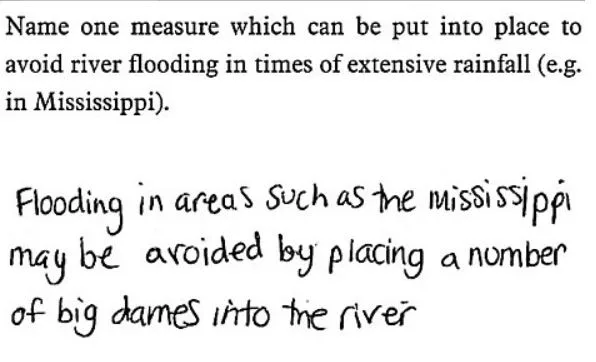
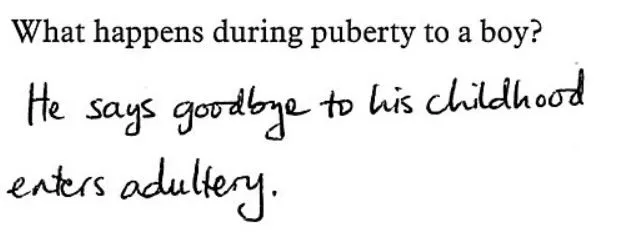
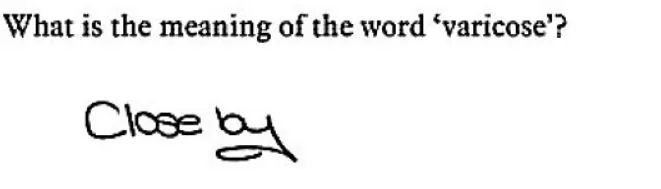
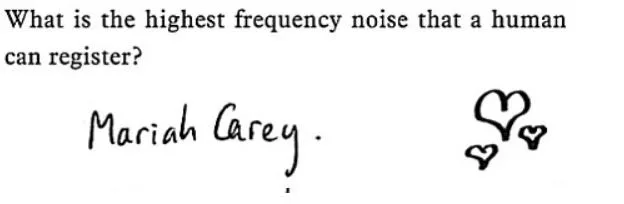
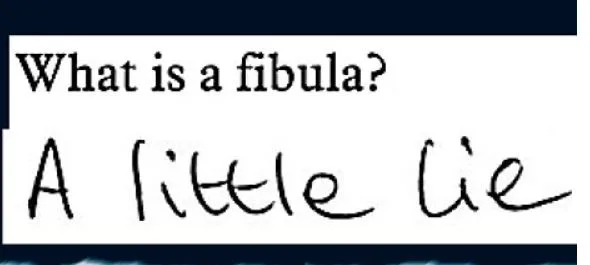
Better make that a 32 ounce!
- Published on

Thanks to my Highsmith Librarian's Desk Calendar, I learned that today, August 18th, is National Bad Poetry Day. Of course I had to do a little research on this holiday of which I knew absolutely nothing (except that it sounds delightfully fun!) Turns out that National Bad Poetry Day was not created by Congress, nor the Library of Congress, nor Hallmark (that would be National Sappy Poetry Day), nor Leonard Pinth-Garnell, but by entrepreneurs Thomas and Ruth Roy, who apparently copyrighted the idea through their "Wellcat" website. (They also apparently sell herbs, but I did not venture a mouse click to find out which kind.) The Roys suggest celebrating the holiday by inviting some friends over to write some wretched poems and then sending them to your old high school English teachers. I'll admit that sounds like a hoot to me (but then I'm a writer.) If you don't have time to put together a poetry party, you can mark the day by checking out the bad poetry compiled at (where else?) Very Bad Poetry ("the last refuge of the world's worst poetry.")
There you can find such gems as "Mexican Food" (which, to pinch a Pinth-Garnell phrase, really bites the big one (pun fully intended). Or take a gander at the execrable haiku "Butterfly" (as Pinth-Garnell would say "exquisitely awful") or the monumentally ill-advised "Fattypants." You might also despise the horrifically sadistic "Bachelor of IT" and the stunningly bad favorite of physicists everywhere, "Schrodinger's sex panther."
Or take a moment to jot down some unrelentingly bad verse yourself and post it. If you do, send me the link so we can all enjoy. Or feel free to write some bad (as opposed to badass) poetry in the comment box. As Leonard Pinth-Garnell would put it, "There now, that wasn't so good, was it?"
There you can find such gems as "Mexican Food" (which, to pinch a Pinth-Garnell phrase, really bites the big one (pun fully intended). Or take a gander at the execrable haiku "Butterfly" (as Pinth-Garnell would say "exquisitely awful") or the monumentally ill-advised "Fattypants." You might also despise the horrifically sadistic "Bachelor of IT" and the stunningly bad favorite of physicists everywhere, "Schrodinger's sex panther."
Or take a moment to jot down some unrelentingly bad verse yourself and post it. If you do, send me the link so we can all enjoy. Or feel free to write some bad (as opposed to badass) poetry in the comment box. As Leonard Pinth-Garnell would put it, "There now, that wasn't so good, was it?"
- Published on
In one of those moments where I went searching for information about one topic and stumbled across information on something entirely different, I recently learned that the Kingdom of Bhutan measures not only its Gross Domestic Product (GDP), but its Gross National Happiness (GNH) as well.
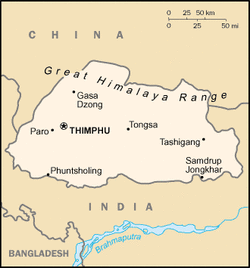
Bhutan ("Land of the Thunder Dragon") is a landlocked state in South Asia, nestled on the southern slopes of the Himalayas, sandwiched between India and China. It's a land of steep, jagged mountains and deep valleys through which course swift-flowing rivers. Its diverse flora and fauna include the increasingly rare Bengal tiger and snow leopard, the red panda, and primates such as the golden langur. (Sounds delightfully like some parts of Middle Earth.)

In 1999, just before the new Millennium, Bhutan lifted its ban on television and the Internet. And throughout the first decade of the 21st Century, it underwent considerable political reform, becoming a constitutional monarchy, with a cabinet of ministers and an elected National Assembly that has the power to impeach the monarch! Through the Centre for Bhutan Studies, it also made a serious attempt to measure the happiness of its people through an indicator called Gross National Happiness that measures quality of life and social progress in more holistic and psychological terms than simple economic factors, which in Bhutan's case is "how much electricity can we sell to India?" (All those rushing rivers create a lot of hydroelectric power!)

Learning all this, of course, got me to thinking about happiness in general. Bhutan measures it in nine different domains, including time use, cultural and ecological diversity, resilience, education, health and something called "good governance." Hmmmm, we might have to leave that last one off of any happiness survey taken in Illinois (and on a national level).

The King and Queen of Bhutan, who look happy and beautiful (graduates of Oxford U. and Regents College)
When seeking to form an opinion on weighty matters, I often like to consult the words of my predecessors in hopes of gaining a larger perspective. So once again, I turned to Bartlett's and the online quote farms for a gander at the wisdom of the ancients.

Since the majority of the Bhutanese practice Buddhism, it seemed appropriate to consult Buddha first. And, as usual, with him, as with Janet Jackson, it's all about control: "To enjoy good health, to bring true happiness to one's family, to bring peace to all, one must first discipline and control one's own mind. If a man can control his mind he can find the way to Enlightenment, and all wisdom and virtue will naturally come to him." The Dalai Lama weighed in on this as well: "Happiness is not something ready made. It comes from your own actions." I sense a lack of emphasis on the material here.
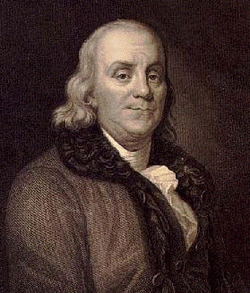
"Money has never made man happy, nor will it, there is nothing in its nature to produce happiness. The more of it one has the more one wants." That's Benjamin Franklin talking. Of course, he also said this: "Marriage is the most natural state of man, and... the state in which you will find solid happiness." And there are scads of unhappily married people in the world who would vociferously disagree. (I would hope that does not include the King and Queen of Bhutan, who look like a darling couple who would be a sparkling addition to any dinner party.)
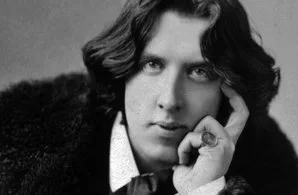
Speaking of dinner parties, that means other people, and there are plenty of opinions out there about how other people can or cannot affect one's happiness quotient. As Oscar Wilde, he of the razor-sharp wit, noted: "Some cause happiness wherever they go; others whenever they go." I would be remiss if I did not consult the Bard of Avon, who moaned: "But O, how bitter a thing it is to look into happiness through another man's eyes." (from Act 5, Scene 2, As You Like It.) Mr. Acerbic Straightshooter (literally and figuratively) Ernest Hemingway complained that "the only thing that could spoil a day was people. People were always the limiters of happiness except for the very few that were as good as spring itself."

Wow, you're mumbling to yourself, this is getting rather depressing! I thought the topic was "happiness!" Okay, okay, enough angst about happiness!
After all, according to comedian George Burns, "happiness is having a large, loving, caring, close-knit family in another city." And doctor, do-gooder and Nobel Prize-winner Albert Schweitzer (and Audrey Hepburn paraphrasing him) joked that "happiness is nothing more than good health and a bad memory."
After all, according to comedian George Burns, "happiness is having a large, loving, caring, close-knit family in another city." And doctor, do-gooder and Nobel Prize-winner Albert Schweitzer (and Audrey Hepburn paraphrasing him) joked that "happiness is nothing more than good health and a bad memory."
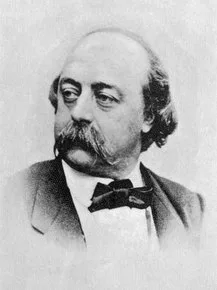
Hmmm, I sense a trend here about happiness and the brain. Hemingway (yes, him again) wrote: "Happiness in intelligent people is the rarest thing I know." But let's allow Gustave Flaubert to have the last word on happiness for today: "To be stupid, selfish, and have good health are three requirements for happiness, though if stupidity is lacking, all is lost." Okay, Mr. Flaubert, if that's the case, then what was Madame Bovary's problem?
- Published on
A couple of posts ago, I summed about the hilarity of #CheeseLit, which attempted to come up with the cheesiest book titles ever. Well, today's inspired hashtag is ZombieWesterns. What a fabulous way to waste the precious time we have on this Earth! However did we have fun without Twitter?
Some favorites and a few of my own devising...
Some favorites and a few of my own devising...

10. All the Pretty Corpses
9. High Brains Drifter
8. Extremely Pale Rider
7. Butchered Cassidy and the Undead Kid
9. High Brains Drifter
8. Extremely Pale Rider
7. Butchered Cassidy and the Undead Kid

6. Munch Upon a Guy in the West
5. The Good, the Bad and the Undead.
4. The Man Who Ate Liberty Valence
3. The Ox-Bone Incident
2. The Quick and the Living Dead
5. The Good, the Bad and the Undead.
4. The Man Who Ate Liberty Valence
3. The Ox-Bone Incident
2. The Quick and the Living Dead

And one of my favorite Westerns....
1. True Gristle
Again, thanks to Keir Graff of Booklist Online for his creative jump-start.
1. True Gristle
Again, thanks to Keir Graff of Booklist Online for his creative jump-start.
- Published on
August 6th marks the 67th anniversary of the destruction of the city of Hiroshima, Japan with the first use of an atomic weapon. Thinking men and women should spend some time investigating the back story of this event and its role in shaping the world as we know it.
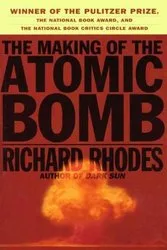
The Making of the Atomic Bomb
Richard Rhodes (Simon & Schuster, 1986)
This is the definitive work on the subject. Yes, it's long (over 800 pages) and not an easy read, but Rhodes writes in a gripping style and delivers facinating psychological insights into the personalities of the men behind the Manhattan Project. Rhodes covers it all: the theoretical origins of the bomb in the mind of Leo Szilard, the lab experiments spearheaded by Enrico Fermi and his crew of scientists at the University of Chicago, the building of the prototype, the test at Alamagordo, New Mexico, the training of the B-29 crews assigned to deliver the first two bombs and the missions themselves. He also delves into the struggle in Nazi Germany and Imperial Japan to make the first bomb, as well as the political and military events that led to the destruction of the Japanese cities of Hiroshima and Nagasaki. Well worth the time and effort.
Richard Rhodes (Simon & Schuster, 1986)
This is the definitive work on the subject. Yes, it's long (over 800 pages) and not an easy read, but Rhodes writes in a gripping style and delivers facinating psychological insights into the personalities of the men behind the Manhattan Project. Rhodes covers it all: the theoretical origins of the bomb in the mind of Leo Szilard, the lab experiments spearheaded by Enrico Fermi and his crew of scientists at the University of Chicago, the building of the prototype, the test at Alamagordo, New Mexico, the training of the B-29 crews assigned to deliver the first two bombs and the missions themselves. He also delves into the struggle in Nazi Germany and Imperial Japan to make the first bomb, as well as the political and military events that led to the destruction of the Japanese cities of Hiroshima and Nagasaki. Well worth the time and effort.

Pandora's Keepers: nine men and the atomic bomb
Brian VanDeMark (Little, Brown, 2003)
VanDeMark puts his focus on the nine men who built the atomic bomb and how each struggled with the implications of their deadly creation. He does an excellent job of bringing these brilliant scientists to life in this examination of the moral ambiguity that exists in "an imperfect world that sometimes forges good from evil and evil from good." First, we witness science at work, in the act of creation that drove these talented individuals. However, then VanDeMark switches gears and tackles the issues of the aftermath, when the scientists, academics all, realized the real-world horrors and implications for the future that their creation had wrought. Pandora indeed.
Brian VanDeMark (Little, Brown, 2003)
VanDeMark puts his focus on the nine men who built the atomic bomb and how each struggled with the implications of their deadly creation. He does an excellent job of bringing these brilliant scientists to life in this examination of the moral ambiguity that exists in "an imperfect world that sometimes forges good from evil and evil from good." First, we witness science at work, in the act of creation that drove these talented individuals. However, then VanDeMark switches gears and tackles the issues of the aftermath, when the scientists, academics all, realized the real-world horrors and implications for the future that their creation had wrought. Pandora indeed.

Shockwave: countdown to Hiroshima
Stephen Walker (Harper Collins, 2005)
This high-speed rollercoaster ride of a narrative recreates a (literally) minute-by-minute retelling of the Hiroshima bombing as remembered by American soldiers, Los Alamos scientists, and Japanese survivors. He examines the doubts and fears of the bomb's designers, the thought processes behind the selection of the targets, and the bewilderment of citizens of Hiroshima, who were victims not only of the U.S. bomb, but a Japanese government controlled by men who were determined to continue the fight at all costs.
Stephen Walker (Harper Collins, 2005)
This high-speed rollercoaster ride of a narrative recreates a (literally) minute-by-minute retelling of the Hiroshima bombing as remembered by American soldiers, Los Alamos scientists, and Japanese survivors. He examines the doubts and fears of the bomb's designers, the thought processes behind the selection of the targets, and the bewilderment of citizens of Hiroshima, who were victims not only of the U.S. bomb, but a Japanese government controlled by men who were determined to continue the fight at all costs.
- Published on
There are plenty of books and films out there with cheesy titles, whether intentional or not. But what could you come up with if asked to write the -literally- cheesiest title ever? Well, the good and creative folks over at Booklist, one of my favorite go-to sources for book reviews, spent a Friday putting Twitter to good use doing just that. I am compelled to pass along some of my top ten favorites...

10. To Havarti and to Havarti Not
9. East of Edam
8. The Scarlet Cheddar
7. Colby-Dick
6. Ricottahouse 5
9. East of Edam
8. The Scarlet Cheddar
7. Colby-Dick
6. Ricottahouse 5

5. The Island of the Blue Cheese Dolphins
4. Ethan Fromage
3. The Gouda Earth
2. The Old Man and the Brie
4. Ethan Fromage
3. The Gouda Earth
2. The Old Man and the Brie

And my number one favorite: The Velveeta Rabbit!
You can read the entire Best of #CheeseLit blog post at Likely Stories, a Booklist Online blog by Keir Graff.
You can read the entire Best of #CheeseLit blog post at Likely Stories, a Booklist Online blog by Keir Graff.
- Published on

Spokesmen and/or women… you know, those people who become the commercial face and voice for faceless, impersonal corporations. You’ve seen them on TV and heard them over the radio: the reassuring Dennis Haybert for Allstate Insurance; the cocky William Shatner for Priceline; Mike Rowe for Ford; Morgan Freeman for just about everybody else. (Apparently he's #5 on the list of the Top Ten Most Trusted Celebrities. And happy to do voiceovers. Nice work if you can get it!)

Well, Dow, the chemical conglomerate, has got a new spokesman with neither a face nor a voice. In fact, it’s a bit of shrubbery. Hopeiary (yes, that's what it's called - ugh!) is a giant green biped made of hedges, created by the ad agency Draftfcb in Chicago. (Perhaps the admen are Monty Python fans?) Hopeiary even has his/its own website! (Is he/it planning on being the most interesting shrub in the world?) If you’ve watched even a tidbit of the Olympics, you’ve probably seen a commercial with this anthropomorphic topiary, walking around London, stumbling into Olympic athletes. Apparently he symbolizes the planet with "its own Olympic dream"—which is to not get totally, irreparably wrecked by humans. Dow's environmental history as a global corporate citizen is checkered at best, including its links with the horrendous gas leak at a pesticide factory in Bhopal, India, 28 years ago, which killed almost 3,800 people. (It bought out Union Carbide, which owned the factory at the time.) So Hopeiary seems like more than a bit of greenwashing to me…
- Published on
If a Martian landed on Earth and watched the Summer Olympics on prime-time television, it would probably conclude that the games consist of a handful of sports: swimming, gymnastics, diving, soccer, basketball and track-and-field events. In reality, the London 2012 Olympics will feature 26 sports in 302 medal events. Since the inaugural of the Modern Olympics in 1896, sports have been dropped and added as popularity and/or feasibility waxes and wanes. Here's a look at a few of those obscure or obsolete sports, which may leave you scratching your head and muttering, "What were they thinking?"
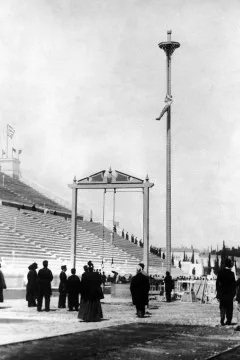
The Rope Climb
Shades of a 1960's era gym class! Shinnying up a rope was once an Olympic event! Rope Climbing was included in the gymnastics program from 1896 through 1932. Competitors were required to ascend a suspended vertical rope, using only their hands. They started from a seated position on the floor and were timed. (Apparently in the 1896 event, style points were also awarded.) In 1896, the rope was 14 meters long (almost 46 feet!!!). Only two men, both Greek athletes, made it to the top. For future events, they lopped off about half the rope! And as all who suffer from a distinct lack of upper body strength sigh in relief, the powers-that-be (the IOC) dropped the rope after 1932. Unfortunately, sadistic gym teachers around the world kept the activity to torture their students throughout elementary and high school.
Shades of a 1960's era gym class! Shinnying up a rope was once an Olympic event! Rope Climbing was included in the gymnastics program from 1896 through 1932. Competitors were required to ascend a suspended vertical rope, using only their hands. They started from a seated position on the floor and were timed. (Apparently in the 1896 event, style points were also awarded.) In 1896, the rope was 14 meters long (almost 46 feet!!!). Only two men, both Greek athletes, made it to the top. For future events, they lopped off about half the rope! And as all who suffer from a distinct lack of upper body strength sigh in relief, the powers-that-be (the IOC) dropped the rope after 1932. Unfortunately, sadistic gym teachers around the world kept the activity to torture their students throughout elementary and high school.
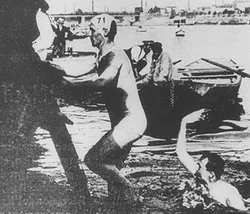
Swimming Obstacle Race
This one-time-only event was held in 1900 at the Paris Summer Games, but I am guessing that it might be ripe for a revival and a return to the Olympic roster, given the popularity of such TV shows as "American Ninja Warrior" and "The Amazing Race," which feature all sorts of crazy obstacle course challenges. Could become a new fan favorite! As a combination swimming event/obstacle course, the competitors had to climb over a pole, then clamber over a row of boats, and then swim under another row of boats (total distance 200 meters). Since this event was held outdoors in the River Seine, the competitors also had to contend with the current. Might be a way for Michael Phelps to continue competing into his thirties...
This one-time-only event was held in 1900 at the Paris Summer Games, but I am guessing that it might be ripe for a revival and a return to the Olympic roster, given the popularity of such TV shows as "American Ninja Warrior" and "The Amazing Race," which feature all sorts of crazy obstacle course challenges. Could become a new fan favorite! As a combination swimming event/obstacle course, the competitors had to climb over a pole, then clamber over a row of boats, and then swim under another row of boats (total distance 200 meters). Since this event was held outdoors in the River Seine, the competitors also had to contend with the current. Might be a way for Michael Phelps to continue competing into his thirties...
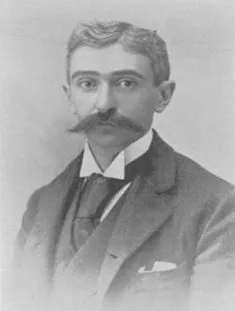
Art
I kid you not. From 1912 to 1948, the Olympics included competitions in the artistic categories of architecture, literature, music, painting, and sculpture. In fact, the "father of the Modern Olympic movement," Pierre de Coubertin, founder of the International Olympic Committee, won a gold medal in literature for his poem "Ode Au Sport" in 1912. I know what you're thinking: they gave it to him because he was the boss. Actually, he submitted the entry under a pseudonym. Of course, when he won, he had to present the gold medal to himself. Scandalous!
I kid you not. From 1912 to 1948, the Olympics included competitions in the artistic categories of architecture, literature, music, painting, and sculpture. In fact, the "father of the Modern Olympic movement," Pierre de Coubertin, founder of the International Olympic Committee, won a gold medal in literature for his poem "Ode Au Sport" in 1912. I know what you're thinking: they gave it to him because he was the boss. Actually, he submitted the entry under a pseudonym. Of course, when he won, he had to present the gold medal to himself. Scandalous!
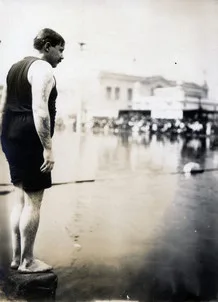
Plunge for Distance
When we were kids, we used to call this "Dead Man's Float." You know, you dive in the pool and then see how far you can travel underwater without using your hands or feet to help propel your body. The one who gets the farthest before his head surfaces wins. This event was only held once at the Olympics, in Paris 1904. I wonder why...
(Photo courtesy of Missouri History Museum)
When we were kids, we used to call this "Dead Man's Float." You know, you dive in the pool and then see how far you can travel underwater without using your hands or feet to help propel your body. The one who gets the farthest before his head surfaces wins. This event was only held once at the Olympics, in Paris 1904. I wonder why...
(Photo courtesy of Missouri History Museum)
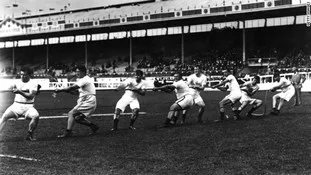
Tug-of-War
(Not to be confused with T.E.G.W.A.R., the notorious card game from Mark Harris' novel Bang The Drum Slowly)
Yes, another children's game was a sanctioned Olympic Summer Games event from 1900 through 1920. Tug-of-war was part of the track & field events. Perhaps it was included as an homage to the Ancient Olympics of Greece, where it was a highly anticipated contest. In the modern Olympics, the tug-of-war event pitted two teams of eight contestants. In order to be victorious, one team had to pull the other six feet in order to win. If after 5 minutes no team had achieved this, the team which had pulled the greatest distance was declared the winner.
(Not to be confused with T.E.G.W.A.R., the notorious card game from Mark Harris' novel Bang The Drum Slowly)
Yes, another children's game was a sanctioned Olympic Summer Games event from 1900 through 1920. Tug-of-war was part of the track & field events. Perhaps it was included as an homage to the Ancient Olympics of Greece, where it was a highly anticipated contest. In the modern Olympics, the tug-of-war event pitted two teams of eight contestants. In order to be victorious, one team had to pull the other six feet in order to win. If after 5 minutes no team had achieved this, the team which had pulled the greatest distance was declared the winner.
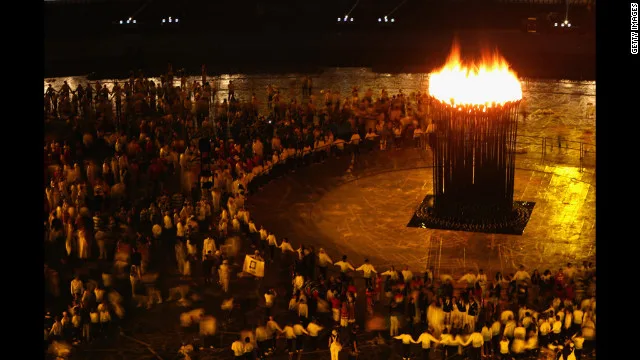
London Olympic Stadium 2012 (Courtesy: CNN.com)
- Published on
Intern George, on the ground in London, reports that the London 2012 Oympics have added a third mascot, who joins the original one-eyed twins, Wenlock and Mandeville. Mike Wazowski, co-star of the film Monsters Inc., has reportedly been brushing up on his British accent for the event.

A deal is in the works for the three to star in a Spanish remake of The Three Amigos, titled El Tres Ojos.